
Why RV Solar Systems Fail When Charging Sources Are Not Balanced Properly
Most modern RVs run multiple charging inputs, especially once lithium batteries are in the mix. Each source has its own voltage curve and charging profile.
What Happens When Sources Compete
Most modern RVs run multiple charging inputs, especially once lithium batteries are in the mix. Each source has its own voltage curve and charging profile. When one doesn’t know what the others are doing, you end up with over-voltage spikes, premature shutoffs, or batteries that never reach a full, healthy charge. Over time that shows up as reduced capacity, unexpected battery warnings, or inverters dropping out even when the sun is shining.
We see this a lot on rigs that started with a basic solar kit and later added more panels or a second charging method. The pieces work individually, but the overall system never got tuned so everything hands off cleanly. That’s when owners notice the batteries sitting at 80 percent all day or the charge controller throttling back for no obvious reason.
Real-World Conditions in Nevada
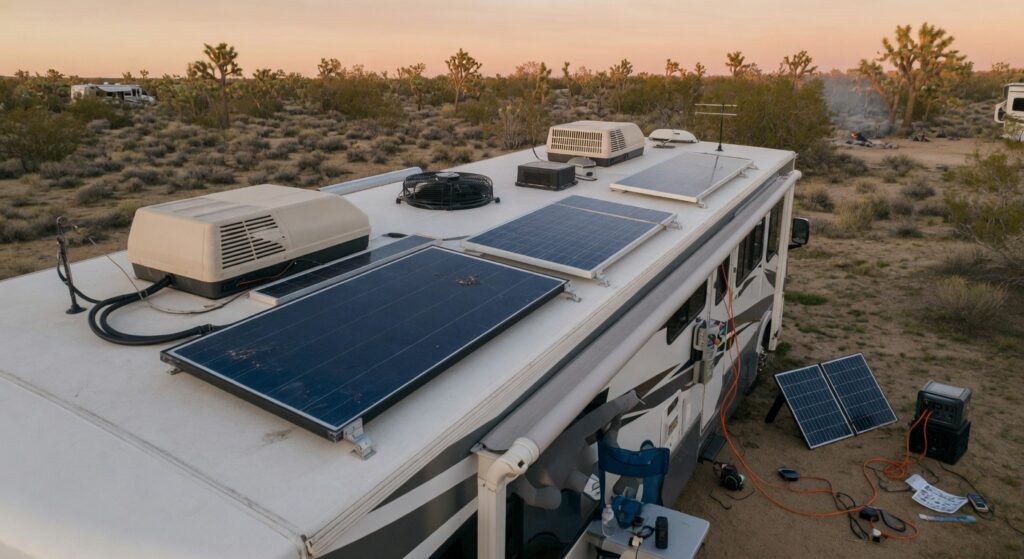
Boondocking around Reno and the high desert adds another layer. Temperatures swing hard between day and night, and dust can affect panel output. A system that looked fine on a test bench can fall out of balance once it’s actually living in those conditions. The solar array might push hard in the morning while the alternator is still contributing from the drive in, and without proper coordination the batteries see conflicting signals. We sweat the details on these hand-offs because we install systems we’d want ourselves when we’re camped off-grid for a week.
Why “More Power” Alone Doesn’t Fix It
It’s tempting to think adding another panel or a bigger charger will solve low battery readings. In practice, extra capacity without proper integration often makes the imbalance worse. The controller for one source may back off while another keeps pushing, or the battery management system starts cycling protective modes more often than it should. The result is the same: shorter battery life and less usable power when you actually need it.
That’s why we focus on custom design rather than bolting on random components. Every RV has different loads, different battery banks, and different travel patterns. Getting the charging sources to communicate and prioritize correctly takes experience with how these systems behave after thousands of miles and hundreds of charge cycles.
The Payoff of Getting It Right
When the sources are balanced, the system runs quieter and more efficiently. Batteries charge fully without drama, the inverter stays online longer, and you spend less time worrying about where the next amp is coming from. It’s the difference between a setup that works on paper and one that keeps working when you’re two days from the nearest service.
We’ve spent years sorting these interactions on everything from weekend toy haulers to full-time rigs heading into the Nevada backcountry. The goal is always the same: a system that just does its job without constant babysitting.
Text us your RV year, make, model, and what you’re trying to accomplish. The more details you send, the better we can help.
Let’s build your RV solar system the right way.
Text us your RV year, make, model, and what you’re trying to accomplish. We’ll help design a setup around your actual rig, travel style, and power needs.