Running Your RV Air Conditioner on Off-Grid Solar
RV air conditioners are a heavy off-grid load. Learn what solar, lithium capacity, and daily habits actually determine comfort—without one-size-fits-all claims.
The Reality of AC Loads Off-Grid
Air conditioners pull serious power, often 1,200–1,800 watts or more when running, and even higher during startup. Those figures are typical ranges we see, not a promise for every coach or every afternoon. In a typical summer day here in the high desert, that demand adds up fast. We’ve seen plenty of rigs where owners expected to run the AC all day on a modest system and quickly learned that careful monitoring of energy use is essential. A well-matched RV solar systems array and lithium bank can support AC use, but only when the system is sized and configured for the actual conditions you’ll face.
Battery Bank Size Matters More Than You Think
A small lithium bank might get you through a few hours of AC use before you’re watching the state of charge drop uncomfortably low. Larger banks give you more buffer, letting the system ride through cloudy stretches or longer run times without constant worry. We design around real-world usage patterns rather than optimistic lab numbers, because we install systems we’d want ourselves on our own rigs. That means factoring in how long you plan to run the AC, what other loads are also drawing power, and how much charging you can realistically expect from your panels each day.
Startup Load Versus Running Load
The number that surprises people is often the startup surge, not the running watts. An air conditioner can ask the inverter for a short spike well above its steady draw. If the inverter, wiring, and battery bank were sized only for the running figure, the unit may struggle to start even when the bank still has capacity. We look at both numbers together with roof layout and how the coach is insulated, instead of shopping a rotating list of battery brand names.
Solar Panel Count and Placement
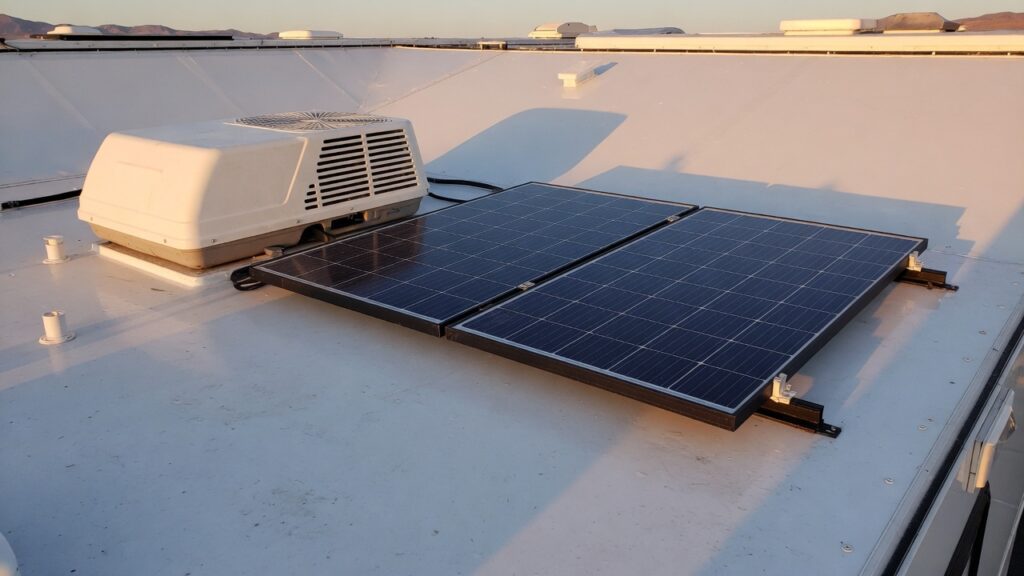
More panels mean more charging capacity, but roof space, shading, and panel orientation all play a role. A couple of extra panels can make the difference between needing to run the generator by mid-afternoon or staying on solar longer. We sweat the details on mounting, wiring, and controller sizing so the array actually delivers what the batteries need under Reno’s intense summer sun and occasional wildfire smoke. Skimping here is one of the quickest ways to end up frustrated with an off-grid setup.
Monitoring and Daily Habits
Even with a capable system, successful AC use off-grid usually comes down to smart habits. Watching your battery levels, timing heavier loads for peak sun hours, and understanding when to ease the thermostat a couple of degrees all help stretch your resources. We build in good monitoring tools so you can see exactly what’s happening instead of guessing. The systems that feel effortless are the ones where the owner has a clear picture of their energy budget rather than hoping everything just works.
Custom Design Over One-Size-Fits-All
Every RV is different—roof layout, existing electrical, insulation quality, and travel plans all affect what works. We focus on tailoring the lithium battery bank and solar array to your specific rig and goals instead of dropping in a generic kit. That approach is what keeps people comfortable instead of constantly managing surprises. When the system matches the way you actually camp, running the air conditioner stops feeling like a gamble and starts feeling like a normal part of the trip.
If you want us to look at your coach, use the service booking form. The date or time you select is only a request and stays pending until our staff confirms it separately. Text us your RV year, make, model, and what you’re trying to accomplish. The more details you send, the better we can help. Browse more owner guides in the Off-Grid Knowledge Base.
Let’s build your RV solar system the right way.
Text us your RV year, make, model, and what you’re trying to accomplish. We’ll help design a setup around your actual rig, travel style, and power needs.