
How a Properly Designed RV Solar and Lithium System Makes Overnight Stops Easier for Travelers Avoiding RV Parks
Planning nights away from RV parks? See how a solar-and-lithium system sized to real travel days supports quiet overnight stops—without treating it like a kit.
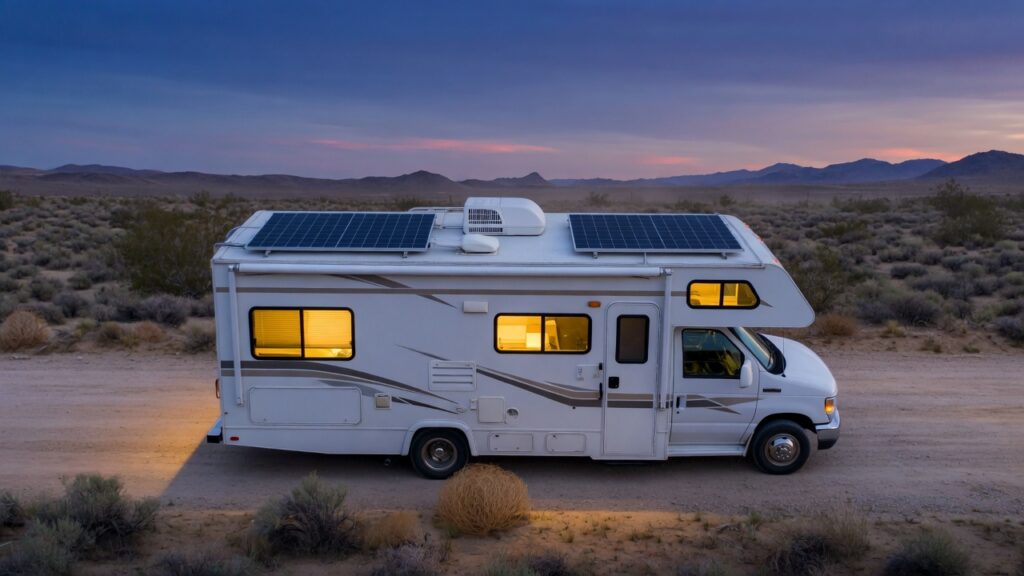
Use the travel day to prepare for the night
An overnight dry-camping stop is different from staying parked for a week. You spend part of the day driving, arrive with a particular amount of stored energy, and need the fridge, lights, water pump and other essentials to last until morning.
Solar can contribute while the coach is moving or parked when conditions allow. Driving may also provide an alternator charging opportunity. We evaluate the alternator-to-house-battery path and any DC-DC charging equipment as part of the system; driving time alone is not a promise that the bank will be full.
Check what driving actually puts back
The useful questions are how long you drive, what charging equipment is installed, and what the RV uses during those hours. The charger, wiring and battery settings need to suit the coach and the bank. Our Cerbo GX monitoring guide shows how to see charging and loads, so arrival is based on readings rather than assumptions.

Plan the evening around stored energy
Lithium batteries typically offer steadier discharge voltage, less weight and more usable rated capacity than the lead-acid banks they replace. They can charge quickly when the rest of the system supports it. Our lithium battery guide explains the fit and charging checks behind that change.
The aim is a quiet evening without needing to idle the engine or run a generator after dark. Whether that works on a particular night depends on the energy you arrive with and what you run. Cloud cover, short winter days and extra evening loads all change the buffer you need.
Make the morning part of the plan
Include morning coffee, lights and vent fans in the overnight budget, then look at the next charging opportunity. A short drive is a different plan from a full day on the road. Several dry-camping nights in a row are different again.
We account for roof space, driving habits, seasonal conditions, charge controllers and the inverter loads you actually use. The goal is to make those travel-day stops easier, with clear monitoring and realistic expectations about the following morning.
See the visual guide: Cerbo GX power monitoring.
If you want us to look at your coach, use the service booking form. The date or time you select is only a request and stays pending until our staff confirms it separately. Text us your RV year, make, model, and what you’re trying to accomplish. The more details you send, the better we can help. Browse more owner guides in the Off-Grid Knowledge Base.
Let’s build your RV solar system the right way.
Text us your RV year, make, model, and what you’re trying to accomplish. We’ll help design a setup around your actual rig, travel style, and power needs.