
Why RV Solar Systems Should Be Designed Around Real Camping Habits, Not Just Battery Capacity
Learn why RV solar should be designed around real camping habits, travel style, and daily power use—not battery capacity alone.
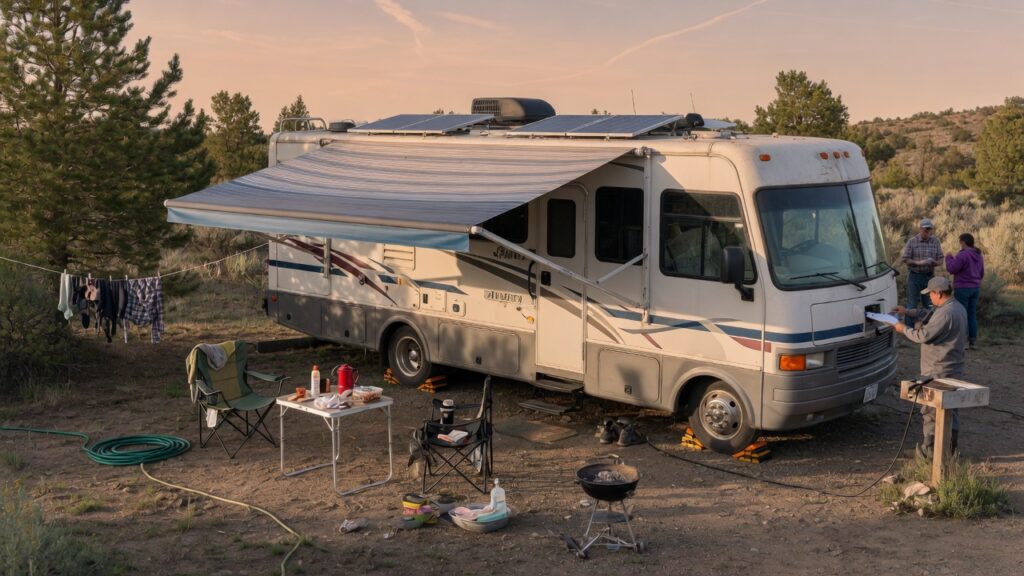
Weekend camper: look at the trip between hookups
A weekend with hookups can hide how much power your RV uses. For a short off-grid trip, the question is what the fridge, lights, fans and other ordinary loads will take between charging opportunities. An impressive battery label does not answer that on its own.
Someone who moves between trailheads and needs lights and a fan overnight has a different pattern from someone who stays parked and works from the RV. Our lithium battery guide explains what we check around the bank before adding capacity.
Snowbird: account for a longer stay and shorter days
Staying in one place for weeks changes the balance. Roof obstacles and shade keep affecting the same panels day after day. Winter sun angle, dust and wildfire smoke can reduce output, while the fridge and daily routines continue to draw power.
For a longer stay, we look at available light, panel placement, real wiring losses and the charging opportunities you will actually have. A bank chosen first can leave controllers and panels struggling to catch up. More storage still has to be recharged.

Full-time boondocker: plan for the daily rhythm
Working remotely, running a residential fridge or cooking on induction makes electricity part of everyday life. Ten days parked is different from an occasional overnight stop. Those patterns affect controller sizing, battery configuration and the loads that can reasonably run together.
Monitoring helps you see the difference between a strong solar day and a day when the bank is steadily losing ground. The Cerbo GX guide shows the kind of information that makes that easier to follow.
The same capacity can serve very different trips
We install systems we would want ourselves, paying attention to panel placement, wire routing and how the rig sits for a long stay. The aim is to choose solar, batteries and loads together, based on how you camp. If you are comparing kits before that conversation, start with the information we ask for before quoting.
See the visual guide: Lithium battery upgrades.
If you want us to look at your coach, use the service booking form. The date or time you select is only a request and stays pending until our staff confirms it separately. Text us your RV year, make, model, and what you’re trying to accomplish. The more details you send, the better we can help. Browse more owner guides in the Off-Grid Knowledge Base.
Let’s build your RV solar system the right way.
Text us your RV year, make, model, and what you’re trying to accomplish. We’ll help design a setup around your actual rig, travel style, and power needs.