
Why RV Owners Should Evaluate Their Real Power Usage and Travel Style Before Buying Solar Kits
Before buying an RV solar kit, get clear on real power usage and travel style so the system matches how you actually camp.
Three things we ask before quoting
A useful solar conversation starts with your coach and what you want it to do. Before we recommend parts, we ask for three things:
- RV year, make and model. This gives us a starting point for roof space, compartments and the factory electrical system.
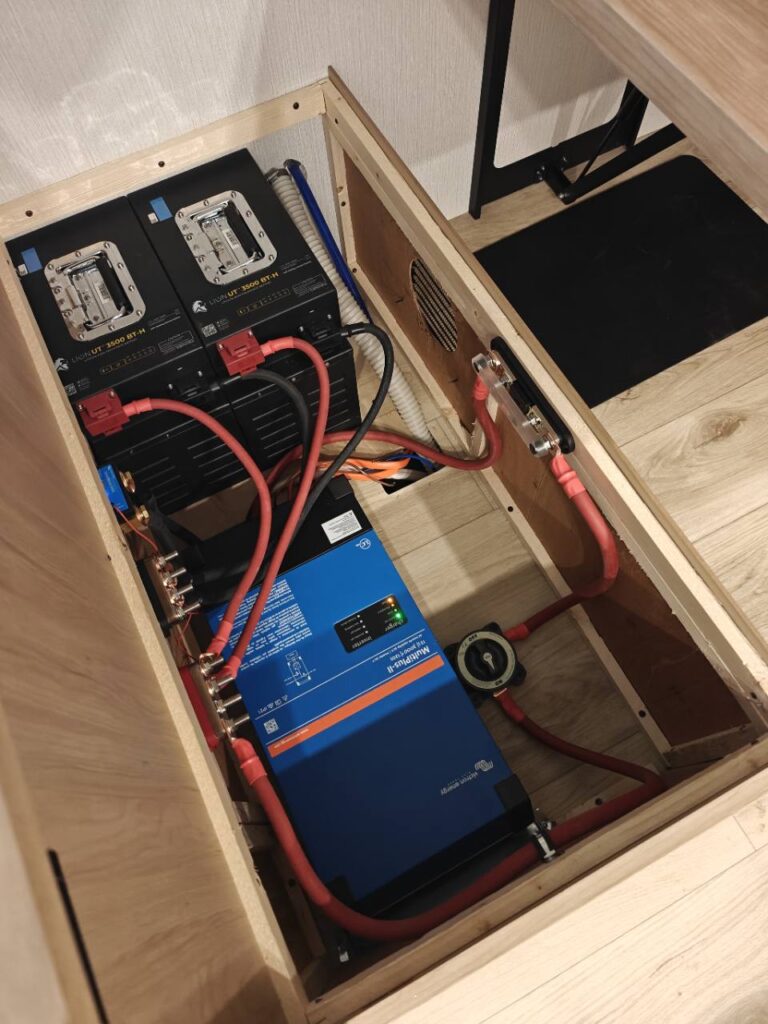
- Your current batteries. Tell us the battery type, quantity and any capacity information you have. If you do not know, say so—we can help identify what is installed.
- What you want to power. List the appliances that matter, how long you use them, and how long you want to stay away from hookups.
Check one ordinary day of use
Most people remember the fridge and lights but miss smaller, constant draws. Write down an ordinary day: what runs, for how long, and what stays on overnight. Include laptops, fans, pumps and any medical equipment. Keep a separate note for unusually heavy loads such as air conditioning.
If you have a battery monitor, record its readings at the start and end of that day, along with any solar, shore-power or driving charge that came in. Our Cerbo GX guide shows how monitoring makes those patterns easier to see. A battery percentage alone does not tell you how much charging happened between readings.
Bring the conditions with the numbers
A summer day outside Fallon can call for more cooling than a shaded fall stop near Lake Tahoe. Note the season, shade and length of your stay. These details help us match panel output, usable battery capacity and charging rates to the actual loads rather than an average kit description.
They also help us decide whether a lithium upgrade, different charging equipment or an inverter change belongs in the plan. We check mounting locations, wire routing and ventilation as part of that conversation.
Use the notes to start a conversation
You do not need perfect measurements before contacting us. Your RV details, current batteries and must-have appliances give us a useful place to start. If you already have a large battery bank but it does not match daily life, read about designing around real camping habits.
See the visual guide: Cerbo GX power monitoring.
If you want us to look at your coach, use the service booking form. The date or time you select is only a request and stays pending until our staff confirms it separately. Text us your RV year, make, model, and what you’re trying to accomplish. The more details you send, the better we can help. Browse more owner guides in the Off-Grid Knowledge Base.
Let’s build your RV solar system the right way.
Text us your RV year, make, model, and what you’re trying to accomplish. We’ll help design a setup around your actual rig, travel style, and power needs.